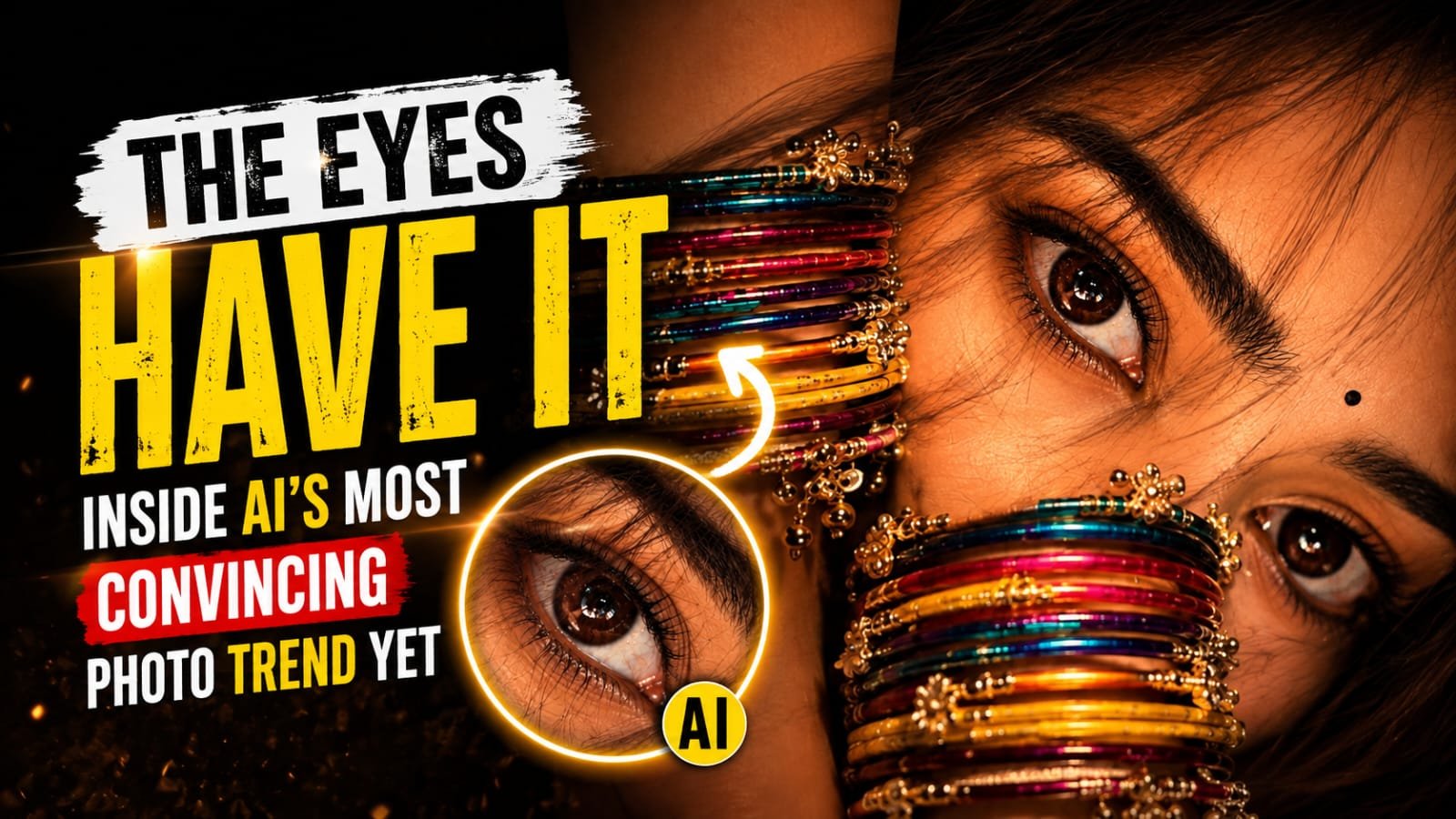
What Your Eyes Are Doing on the Internet Right Now
Somewhere between the fifth and sixth photo of a stranger’s iris, you start to notice the pattern. The lashes catch light in a way no ring light quite manages. A fleck of color sits in the pupil that looks less like pigment and more like a decision. And the face around it — the part that used to matter most in a portrait — has quietly disappeared.
This is the shape 2026’s most confusing photo trend has taken: not a filter, not a costume, not even really a portrait anymore. Just eyes, isolated, staring back at you from a phone screen with the confidence of a magazine cover. Most of them started as a selfie taken in a bathroom mirror or a car seat, fed to an AI model with a paragraph of instructions attached, and returned looking like the work of a photographer who charges by the hour.
The strange part isn’t that the technology can do this. By now, that’s expected. The strange part is why we keep looking.
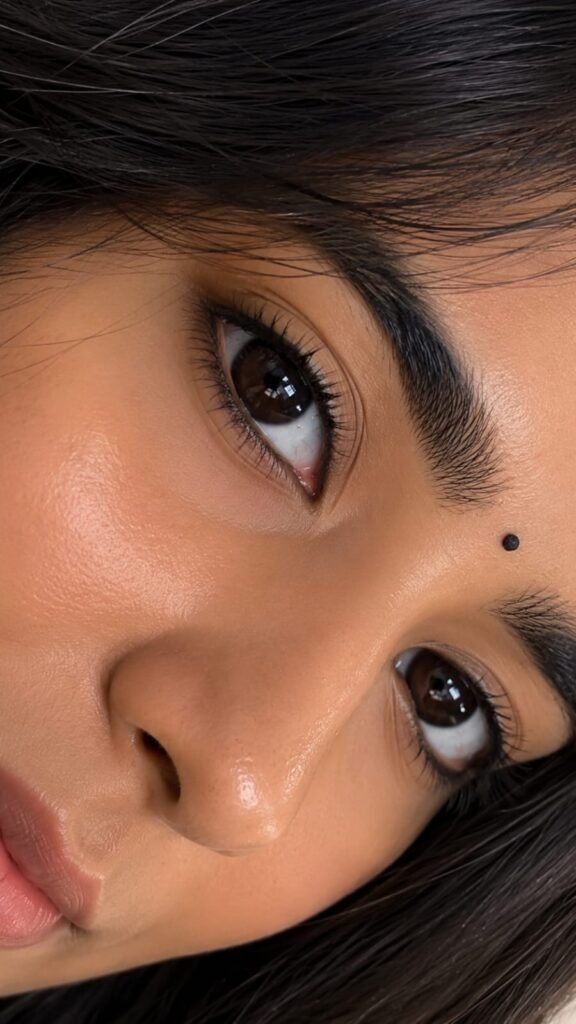
PROMPT:

Use the uploaded photo of the person as a STRICT IDENTITY REFERENCE and recreate the portrait in the exact visual style, composition, camera angle, and framing described below.

IDENTITY — HIGHEST PRIORITY

Preserve the person’s exact recognizable identity from the uploaded photo. Keep their original facial structure, face shape, forehead, eyebrows, eye shape and color, eyelashes, nose shape, lips, cheeks, jawline, skin tone, natural skin texture, hairline, hairstyle, hair color, and every unique facial characteristic.

Do not change, beautify, redesign, replace, age, slim, reshape, enlarge, or otherwise alter the person’s identity. The final result must clearly look like the same person from the uploaded photo.

COMPOSITION

Create an ultra-realistic extreme close-up portrait where the person's face fills almost the entire vertical 9:16 frame.

Rotate the face approximately 90 degrees sideways, creating the distinctive diagonal composition of the reference style.

The camera is extremely close to the face. Both eyes, the nose, eyebrows, eyelashes, cheeks, part of the lips, forehead, and surrounding hair should be visible.

The eyes must be the primary focal point, with the nose occupying the central portion of the composition.

Crop the face very tightly, with almost no background visible.

The final composition should look like a spontaneous flagship-smartphone macro photograph, not a studio portrait.

EYES — MOST IMPORTANT

Both eyes must be extremely sharp and highly detailed.

Preserve the person's original eye shape, size, color, eyelids, and natural proportions.

Show realistic:

- detailed iris patterns
- natural pupils
- glossy eye moisture
- individual eyelashes
- realistic eyelid folds
- subtle natural veins
- authentic catchlights
- reflections of the surrounding environment
- natural wetness along the lower eyelid

Do not make the eyes larger, brighter, more colorful, or more symmetrical than they naturally are.

FACE & SKIN

Preserve the person's authentic skin tone and natural facial texture.

Show realistic pores, tiny imperfections, fine facial hairs, subtle highlights, natural shadows, and realistic skin texture.

The skin should have a slightly dewy natural appearance, with soft highlights on the nose, cheeks, and forehead.

No excessive skin smoothing, whitening, airbrushing, or beauty-filter effect.

HAIR

Preserve the person's exact hairstyle, hairline, hair color, length, texture, and natural parting.

Because of the extreme camera distance, individual hair strands should be clearly visible across the forehead and around the edges of the face.

Hair should look naturally arranged, slightly overlapping the forehead just like a real close-up photograph.

NOSE & FACIAL FEATURES

Keep the person's original nose structure, nostrils, lips, cheeks, eyebrows, and facial proportions completely unchanged.

The nose should appear naturally large in the composition because of the extremely close camera distance — do not artificially enlarge or redesign it.

Keep all facial proportions anatomically realistic.

EXPRESSION

Use a calm, natural expression with the eyes looking naturally toward the camera.

Do not add a smile or exaggerated emotion unless it is already present in the identity reference.

The expression must remain subtle and realistic.

LIGHTING

Use soft, warm natural indoor lighting.

Create realistic highlights across the forehead, nose, cheeks, and eyes.

Add subtle reflected light inside both eyes.

Use gentle natural shadows around the eyelids, nose, and facial contours.

Avoid harsh studio lighting, dramatic colored lighting, or artificial beauty lighting.

CAMERA & PHOTOGRAPHY

Ultra-realistic macro portrait photography.

Flagship smartphone camera quality.

Extremely close focusing distance.

High optical detail.

Natural depth of field.

Sharp eyes with realistic optical falloff toward less important facial areas.

Natural exposure.

High dynamic range.

Realistic skin rendering.

Authentic photographic imperfections.

4K/8K photorealistic detail.

The final image must look like a real photograph captured with a premium smartphone camera at extremely close range.

COLOR GRADING

Natural warm skin tones.

Realistic dark hair.

Subtle contrast.

Natural highlights.

Authentic photographic colors.

Slightly warm and soft overall appearance.

No excessive saturation.

No artificial HDR.

No cinematic color grading that changes the person's natural complexion.

FRAMING

9:16 vertical aspect ratio.

Extreme close-up.

Face fills approximately 90–95% of the frame.

Both eyes prominently visible.

Eyes positioned along the central diagonal composition.

Very minimal background.

The result should closely resemble the tight sideways eye-and-face framing of the provided reference image.

REFERENCE IMAGE RULE

Use the uploaded person's image ONLY for identity.

Use the provided close-up reference image ONLY for composition, camera angle, crop, lighting style, and photographic framing.

Do not copy the reference person's facial features, eye color, nose, lips, skin characteristics, or identity.

The final image must contain the uploaded person's identity while reproducing the reference image's extreme close-up photographic composition.

NEGATIVE PROMPT

different person, changed identity, face swap, facial redesign, altered facial structure, beautified face, beauty filter, plastic skin, airbrushed skin, excessive smoothing, skin whitening, enlarged eyes, redesigned eyes, changed eye color, altered nose, altered lips, slimmer face, different jawline, different hairstyle, different hairline, distorted eyes, asymmetrical eyes, extra eyes, duplicate facial features, deformed nose, unrealistic eyelashes, fake iris, artificial eye reflections, CGI, 3D render, cartoon, anime, illustration, artificial skin, excessive HDR, oversharpening, blurry eyes, low resolution, unrealistic lighting, heavy makeup, exaggerated expression, unnatural proportions, AI artifacts.

FINAL PRIORITY:
Identity accuracy > facial realism > composition > lighting > artistic styling.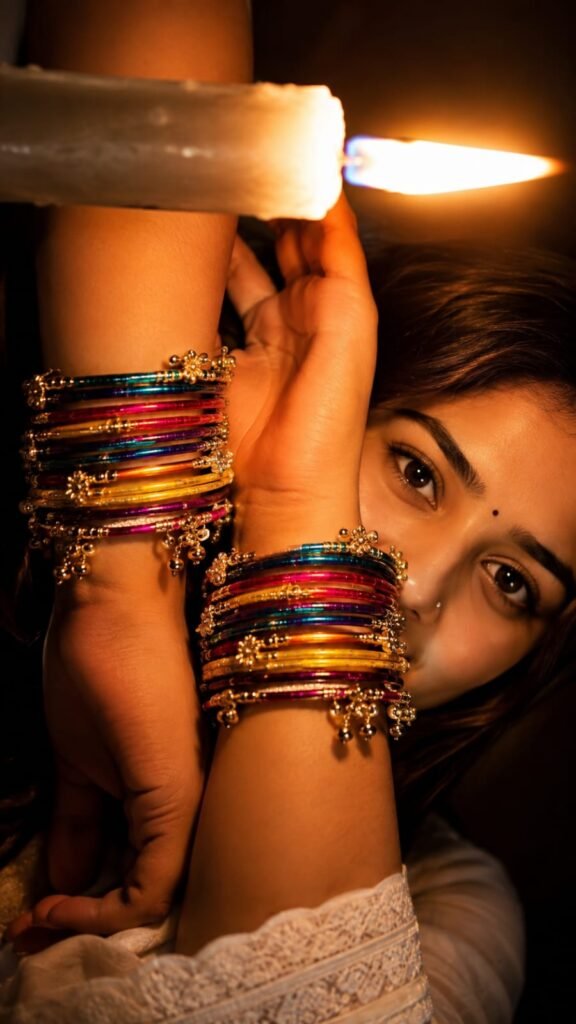
PROMPT:

Create an ultra-realistic cinematic vertical 9:16 portrait using the uploaded reference photo of the person as a STRICT IDENTITY REFERENCE.

IDENTITY — HIGHEST PRIORITY

Preserve the uploaded person's exact recognizable identity with maximum accuracy. Keep their natural facial structure, face shape, forehead, eyebrows, eyes, eye shape, nose, lips, cheeks, jawline, skin tone, skin texture, hairline, hairstyle, hair texture, and all unique facial characteristics exactly consistent with the reference image.

Do not beautify, redesign, replace, slim, reshape, age, de-age, feminize, masculinize, or otherwise alter the person's identity. The person in the generated image must clearly be the same person from the uploaded reference.

EXACT COMPOSITION

Recreate the reference image's composition and visual arrangement as closely as possible.

Create a close-up artistic portrait of the person lying sideways with their face positioned toward the right side of the frame. The camera is extremely close to the subject, creating an intimate macro-style composition.

The person's face is partially framed and partially hidden behind their raised arms. Both forearms/hands are positioned dramatically across the face, creating layered foreground depth.

One arm crosses horizontally through the upper portion of the image, while another arm rises vertically/diagonally near the center of the frame. The eyes remain clearly visible between the arms.

The person's gaze is directed naturally toward the camera with an intense, soft, emotional expression.

JEWELRY

Cover both wrists with many layers of traditional colorful Indian glass bangles.

Use a rich mixture of:

deep blue

turquoise

bright pink

magenta

golden yellow

orange

red

metallic gold


Add intricate traditional golden decorative bangle elements, tiny hanging gold charms, beads, chains, and ornate details between the colorful bangles.

The bangles should look physically realistic, highly detailed, reflective, layered, and naturally fitted around the wrists.

FACE & DETAILS

Keep the person's natural facial appearance from the uploaded reference.

Add a tiny elegant silver/diamond-style nose stud on the nose only if it naturally suits the reference person.

Maintain realistic eyelashes, eyebrows, pores, fine facial texture, natural eye reflections, and subtle imperfections.

Do not make the skin plastic or overly smooth.

HAIR

Keep the reference person's hairstyle and hair texture consistent.

The hair should spread naturally around the head in the background, with individual strands visible. Add realistic warm highlights from the surrounding light.

LIGHTING

Recreate the dramatic warm cinematic lighting of the reference.

Use a strong warm orange/golden light source coming from the upper-right/background area, producing a bright glowing flare and illuminating the face, arms, and bangles.

Create:

warm amber skin illumination

strong golden highlights

soft shadows

cinematic contrast

subtle lens flare

realistic light falloff

glowing highlights around the hair

natural reflections on the bangles


The background should be dark, warm brown/black, softly blurred, and atmospheric.

CAMERA & PHOTOGRAPHY

Extreme close-up portrait photography.

Vertical 9:16 composition.

Professional DSLR/mirrorless look, approximately 85mm–105mm portrait lens, shallow depth of field, wide aperture around f/1.8–f/2.0.

Sharp focus primarily on the eyes and facial details, with realistic depth-of-field falloff toward the foreground bangles and background.

Ultra-realistic skin texture, realistic optical rendering, natural bokeh, cinematic color grading, high dynamic range, professional editorial photography.

COLOR & MOOD

Warm Indian festive aesthetic mixed with dramatic cinematic portrait photography.

Rich orange and golden tones with vibrant jewel-colored bangles.

The final image should feel luxurious, emotional, mysterious, intimate, traditional, and highly aesthetic.

IMPORTANT

Match the reference image's:

camera angle

framing

body positioning

arm placement

face placement

eye visibility

bangle arrangement

lighting direction

warm color palette

background mood

depth of field

overall visual style


Only replace the original person's identity with the identity from the uploaded reference photo.

No text, no watermark, no Instagram interface, no logos, no extra people, no distorted hands, no extra fingers, no malformed jewelry, no duplicate limbs, no artificial-looking skin.

FINAL OUTPUT: Ultra-realistic cinematic Indian portrait, vertical 9:16, extremely detailed, photorealistic, natural skin texture, realistic hands and jewelry, premium DSLR photography quality.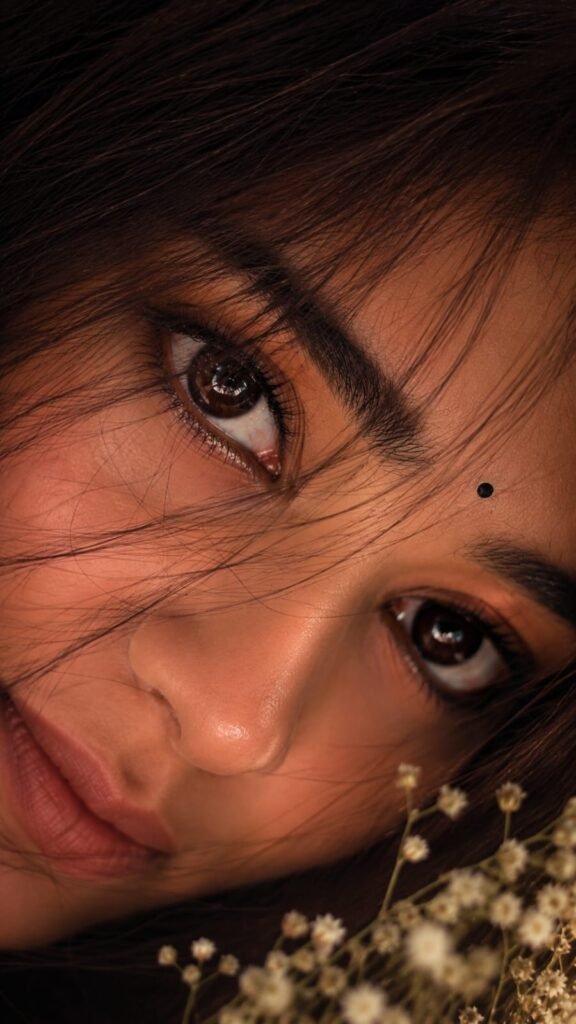
PROMPT:

Use the uploaded reference photo of the person as a STRICT IDENTITY REFERENCE. Preserve the person’s exact recognizable identity, facial structure, face shape, skin tone, eye shape and color, eyebrows, eyelashes, nose, lips, cheeks, jawline, hairline, hairstyle, hair texture, and all unique facial characteristics.

Do not change, beautify, redesign, replace, age, slim, reshape, enlarge, or alter the person’s identity.

Create an ultra-realistic, aesthetic, romantic, emotional extreme close-up portrait of the same person.

POSE & EXPRESSION

The face is positioned at a slightly diagonal/sideways angle, filling almost the entire frame.

The person is looking directly into the camera lens with both eyes clearly visible and sharply focused.

The expression should communicate deep love, emotional connection, softness, and a quiet romantic feeling — subtle and natural, not exaggerated or sad.

The eyes should look slightly emotional and glossy, as if holding a very subtle tear, while still expressing warmth and affection.

Keep the lips naturally relaxed and slightly parted.

HAIR

Allow natural dark hair strands to gently fall across the forehead and partially over the eyes.

Several fine strands should naturally cross in front of the eyelashes and cheeks, creating a soft, effortless romantic aesthetic.

Hair must remain realistic and consistent with the person's original hairstyle, color, length, and texture.

EYES

The eyes are the main focal point.

Preserve the person's original eye shape and color.

Create extremely realistic:

- glossy emotional eyes
- detailed iris texture
- natural pupils
- realistic catchlights
- subtle eye moisture
- individual eyelashes
- natural eyelid texture
- tiny realistic reflections

The eyes should communicate love and emotional eye contact without looking artificial.

SKIN

Preserve the person's authentic skin tone and natural facial texture.

Show realistic pores, fine facial hairs, subtle imperfections, natural highlights, and soft skin texture.

Give the skin a gentle dewy glow, especially around the cheeks, nose, and forehead.

Avoid plastic skin, excessive smoothing, whitening, or beauty-filter effects.

LIGHTING

Use soft warm romantic lighting, similar to golden-hour indoor window light.

Create gentle warm highlights across the face with subtle shadows around the eyes and nose.

Add a delicate cinematic glow around the edges of the hair.

Use soft, dreamy bokeh in the background with warm cream, amber, and subtle pink tones.

ROMANTIC DETAILS

Add a few tiny out-of-focus white baby's-breath flowers near the lower foreground and edge of the frame.

Keep them subtle and blurred so they complement the portrait without covering the face.

Add a very soft atmospheric glow and delicate lens bloom for a dreamy romantic feeling.

CAMERA & QUALITY

Ultra-realistic professional macro portrait photography.

Premium smartphone/DSLR-quality close-up.

85mm macro portrait aesthetic.

Extremely sharp eyes.

Natural optical depth of field.

Realistic skin rendering.

High dynamic range.

Natural photographic imperfections.

Soft cinematic bokeh.

Photorealistic 4K/8K detail.

COMPOSITION

Vertical 9:16 aspect ratio.

Extreme close-up.

Face fills approximately 90–95% of the frame.

Both eyes prominently visible.

Eyes positioned as the strongest focal point.

Minimal background.

Slight diagonal face orientation.

The final image should feel like an intimate romantic Instagram aesthetic photograph, captured spontaneously at very close range.

COLOR GRADING

Warm cinematic skin tones.

Soft golden highlights.

Subtle pink/peach undertones.

Deep natural dark hair.

Gentle contrast.

Soft shadows.

Dreamy romantic atmosphere.

No excessive saturation or artificial HDR.

IDENTITY & REFERENCE RULE

Use the uploaded person's image ONLY for identity and facial characteristics.

Recreate the requested composition, camera angle, emotional expression, lighting, hair placement, and romantic photographic aesthetic without copying another person's facial features.

Identity accuracy must remain the highest priority.

NEGATIVE PROMPT

different person, altered identity, face swap, facial redesign, changed facial structure, beautified identity, plastic skin, excessive retouching, skin whitening, enlarged eyes, changed eye color, altered nose, altered lips, slimmer face, different hairstyle, unrealistic hair, distorted eyes, extra eyes, duplicate features, fake iris, unnatural tears, exaggerated sadness, fake smile, heavy makeup, CGI, 3D render, cartoon, anime, illustration, artificial skin, excessive HDR, oversharpening, blurry eyes, low resolution, unrealistic lighting, excessive bokeh, unnatural proportions, AI artifacts.
A Face With Most of the Information Removed
There’s a reason portrait photographers have always fought over the eyes — light meters aimed at the iris, focus points locked on the lashes, entire lighting setups built around a single catchlight. The eye has always carried more of a photograph’s emotional weight than anything else in frame. What this trend does is take that instinct to its logical extreme: remove everything else and let the eye carry the whole image alone.
It shouldn’t work as well as it does. A photo with less information in it should, in theory, hold less interest. But scrolling behavior doesn’t reward completeness — it rewards interruption. A full face registers as a category the brain has already filed away a thousand times: selfie, seen it, next. An eye alone doesn’t file so easily. It reads as fragment, as detail pulled from something larger, and fragments make people pause to fill in the rest. That pause, repeated across a few hundred thousand feeds, is the entire trend.
It’s worth noting what came directly before this one, because the contrast explains a lot. The eye trends of early 2026 were unapologetically surreal — irises superimposed over cloudscapes, double exposures, colors no human eye has ever produced. This version abandons all of that. It wants to be believed, not admired for its imagination. The compliment it’s chasing isn’t “how creative,” it’s “wait, is that real?” That’s a different, harder target, and it’s why so many attempts at it fail in ways the fantastical version never did — you can’t fake your way through realism the same way you can through spectacle.
Where the Illusion Breaks
Spend enough time looking at these images and a failure pattern becomes obvious. It’s almost never the eye itself that gives an AI-generated close-up away. It’s everything the eye is sitting inside of.
Skin is the first tell. Real skin, viewed this close, is chaotic — pores of inconsistent size, faint redness near the tear duct, the slight sheen that comes from actual oil rather than a “glowing skin” instruction typed into a prompt box. Models that aren’t told to preserve that chaos tend to smooth it into something closer to porcelain, and porcelain is where the eye stops believing what it’s looking at.
The second tell is symmetry that’s too perfect, or asymmetry that’s wrong in the wrong way. A real face has quirks a camera has always captured and a viewer has always unconsciously accepted — one eyelid sitting slightly lower, lashes growing in an uneven cluster. Generated images without explicit instruction to preserve those quirks often “correct” them, and the correction is what makes a face feel unfamiliar even when every individual feature is technically accurate.
The third is light behaving like light shouldn’t. A catchlight — that small white reflection in the iris — has a physical source. It should make sense given the described lighting. When it doesn’t, when it floats or duplicates or sits at an angle nothing in the scene explains, something in the viewer’s eye notices before their conscious mind can say why.
None of these are exotic problems. They’re solved, almost entirely, by being specific rather than vague — describing a real 85mm lens instead of just “close-up,” asking explicitly for skin texture and pore detail instead of “flawless skin,” and telling the model, directly, to preserve the person’s actual features rather than to make them beautiful. Vague instructions produce vague, generic faces. Specific ones produce something closer to a photograph.
The Part Nobody’s Selfie Camera Prepared Them For
The most overlooked variable in all of this has nothing to do with the prompt at all. It’s the starting photo.
An AI model enhancing a well-lit, sharply focused original is doing exactly what the word implies — enhancing. An AI model working from a blurry, dim, badly angled selfie is doing something closer to guessing, and guesses are where the uncanny results come from. Every trick, every carefully worded instruction, every negative prompt excluding distortion — all of it is working uphill against a bad source image, and none of it fully closes that gap.
This is, in a way, a strangely old-fashioned lesson sitting inside a very new technology. Good light still matters. A face turned toward a window still beats a face lit by an overhead bulb. The fundamentals of photography didn’t get replaced by the model — they got outsourced to it, and the model is only as generous with those fundamentals as the photo it’s handed.
Where This Goes Next
Trends built on realism tend to last longer than trends built on spectacle, because realism doesn’t run out of variations the way novelty does. The surreal eye-in-the-sky trend had a shelf life measured in weeks — once the shock wore off, so did the interest. A trend built on “does this look real,” by contrast, keeps generating new angles for as long as people keep getting better at making things look real: new lighting moods, new emotional tones, new levels of detail that weren’t achievable a season earlier.
What’s actually being tested here, underneath the aesthetics, is something more interesting than a photo trend. It’s a public, ongoing referendum on how convincingly a machine can reproduce the single most human detail in a human face. So far, the answer is: convincingly enough that most people can’t tell, and not quite convincingly enough that the ones who can tell have stopped looking for the tells. That gap — between good enough to fool most people and good enough to fool everyone — is where this trend is going to keep living for a while yet.